
Wellness@Work : Food options for better health and cooling off
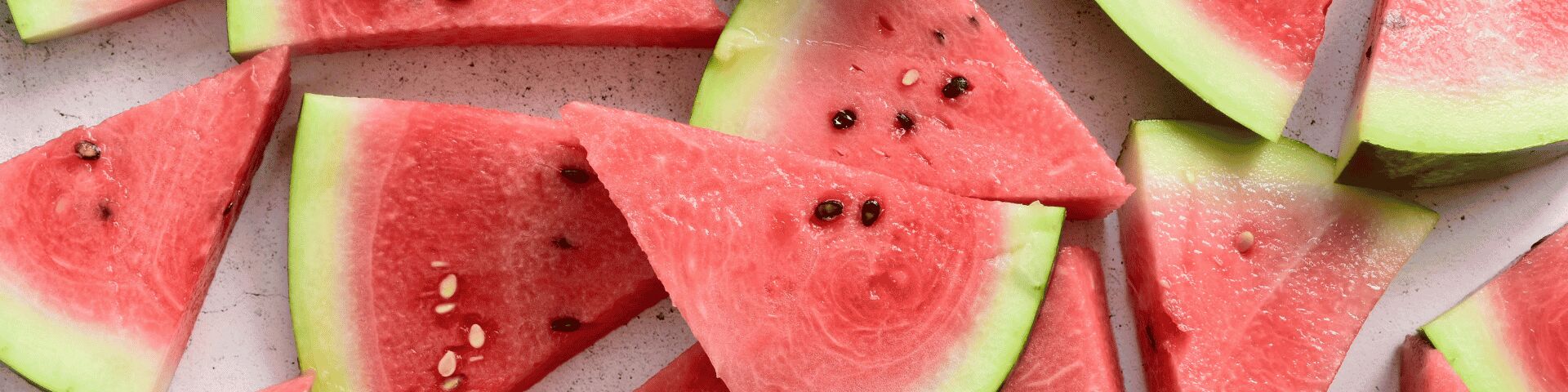
At the next summer cookout, choose watermelon over chips.
Pulling out the seersucker makes me think about how we in the Deep South have always dealt with summer heat. From swimming holes to cold watermelon and long afternoons on the porch, we have a history of finding simple, practical ways to cool down and make peace with the season. Summer seems to have arrived early this year, and it feels mighty hot already, which in my case at least makes me want to slow down, seek some shade and cool off.
It also makes me glad I have tried for a long time to eat only food. I don't eat ultra-processed foods if I can possibly avoid them, and I do pretty well with that. Ultra-processed foods are things that masquerade as foods and that come in shiny bags and packages with lots of colors and are mostly made in big smoke-spewing industrial plants. They are products engineered for shelf life, convenience and profit rather than nourishment.
Ultra-processed foods, such as chips, cookies, snack bars, frozen meals and countless other packaged products, have been linked to a variety of our most common health problems: diabetes, stroke, hypertension and cancer. And if that's not enough to get your attention, researchers are increasingly finding links between diets high in ultra-processed foods and dementia.
A new observational study from the United Kingdom shows a strong association between dementia and high caloric intake from ultra-processed foods. That finding is not surprising to those who have been following the science, but it should be concerning for anyone whose diet consists largely of ultra-processed foods.
Currently, the average American gets somewhere between 50% and 70% of daily calories from ultra-processed foods. According to the study, higher consumption was associated with a substantially increased risk of developing dementia. While studies like this cannot prove cause and effect, the growing body of evidence points in the same direction: The more ultra-processed food we eat, the greater the risk to both our physical and cognitive health.
What does this have to do with summertime and cooling down?
I know, in my case at least, that if I eat watermelon or a tomato instead of potato chips, not only do I feel better — no matter the season — but in the summer I actually feel cooler and more refreshed. I get hydration, vitamins and real nourishment instead of salt, additives and empty calories. Maybe it's only in my head, but hey, how I feel is what matters to me.
Meanwhile, I also know that by eating whole foods — especially those abundant in summer in South Alabama, like zucchini, corn, fish, shrimp, tomatoes, watermelon and peaches — I am doing more than enjoying the flavors of the season. I am reducing my risk of chronic disease and, perhaps, lowering my risk of dementia, something I really do not want my family to have to deal with.
I don't have proof that whole foods help me deal with the heat physiologically, but summer is as much a state of mind as a season. Once I feel hot, once I feel that first trickle of sweat, I'm toast.
So, when the temperature climbs and the humidity settles in, you'll find me doing what Southerners have done for generations: slowing down, finding some shade and heading to the farmer's market. The watermelon is cold, the tomatoes are ripe and the peaches are in season. That sounds like a pretty good way to cool off.
How can you lead a longer, better life? Follow weekly Wellness@Work tips from USA Health Integrative Health and Wellness. We cover ways you can eat better, move better, be more mindful, and find more balance to support your optimal health and well-being. Learn more at usahealthsystem.com/wellness.