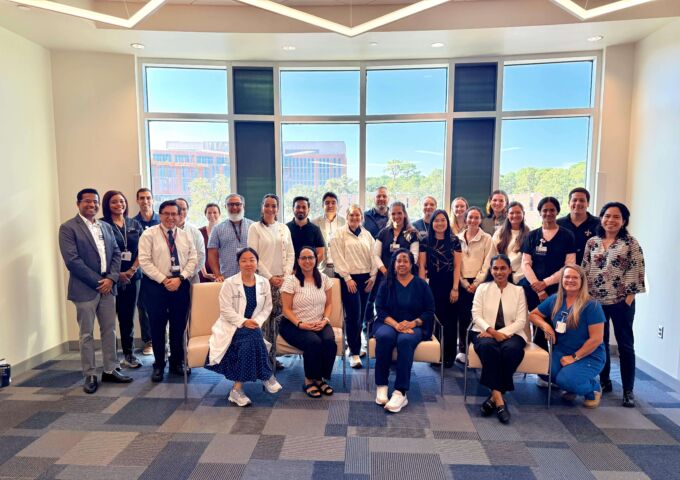
USA Health offers an extensive network of physicians and other healthcare providers. The USA Health Physician Enterprise includes our faculty practice – the largest multispecialty group in the region – as well as our affiliated clinics.
Services
Find a Service
At USA Health, we treat people. In doing so, we want to understand your unique needs so our doctors and other providers can design a plan of care specifically for you. Use the field below to search for a specific service, treatment, specialty or provider.
USA Health offers an extensive network of physicians and other healthcare providers. The USA Health Physician Enterprise includes our faculty practice – the largest multispecialty group in the region – as well as our affiliated clinics.
At USA Health, we treat people. In doing so, we want to understand your unique needs so our doctors and other providers can design a plan of care specifically for you. Use the field below to search for a specific service, treatment, specialty or provider.
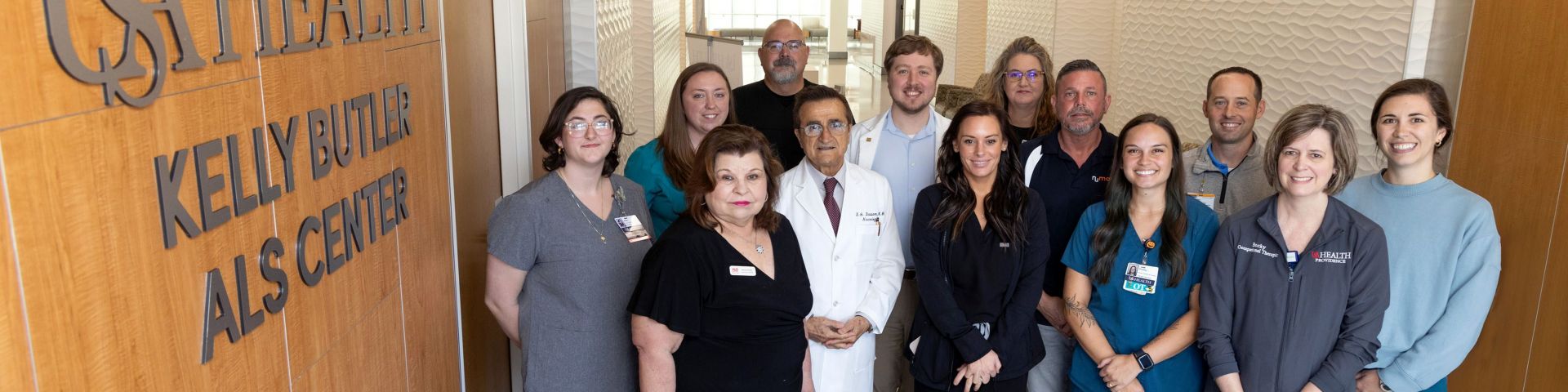
The Kelly Butler ALS Center is a multidisciplinary clinic providing treatment for amyotrophic lateral sclerosis, also known as ALS or Lou Gehrig’s disease. During your visit, you can expect to meet with professionals from a variety of disciplines, including a nurse, neurologist, physical therapist, occupational therapist, speech-language pathologist, respiratory therapist, social worker, and dietitian. You will meet with each of them during your time in the clinic.
You will check in to your appointment on the second floor of the Strada Patient Care Center at the front desk for the Department of Neurology. When it is time for your appointment, the nurse will call you into the clinic from the waiting room. Then, you will meet each of the professionals listed above, one at a time, to evaluate and discuss your current needs and care plan.
What to expect at your appointment
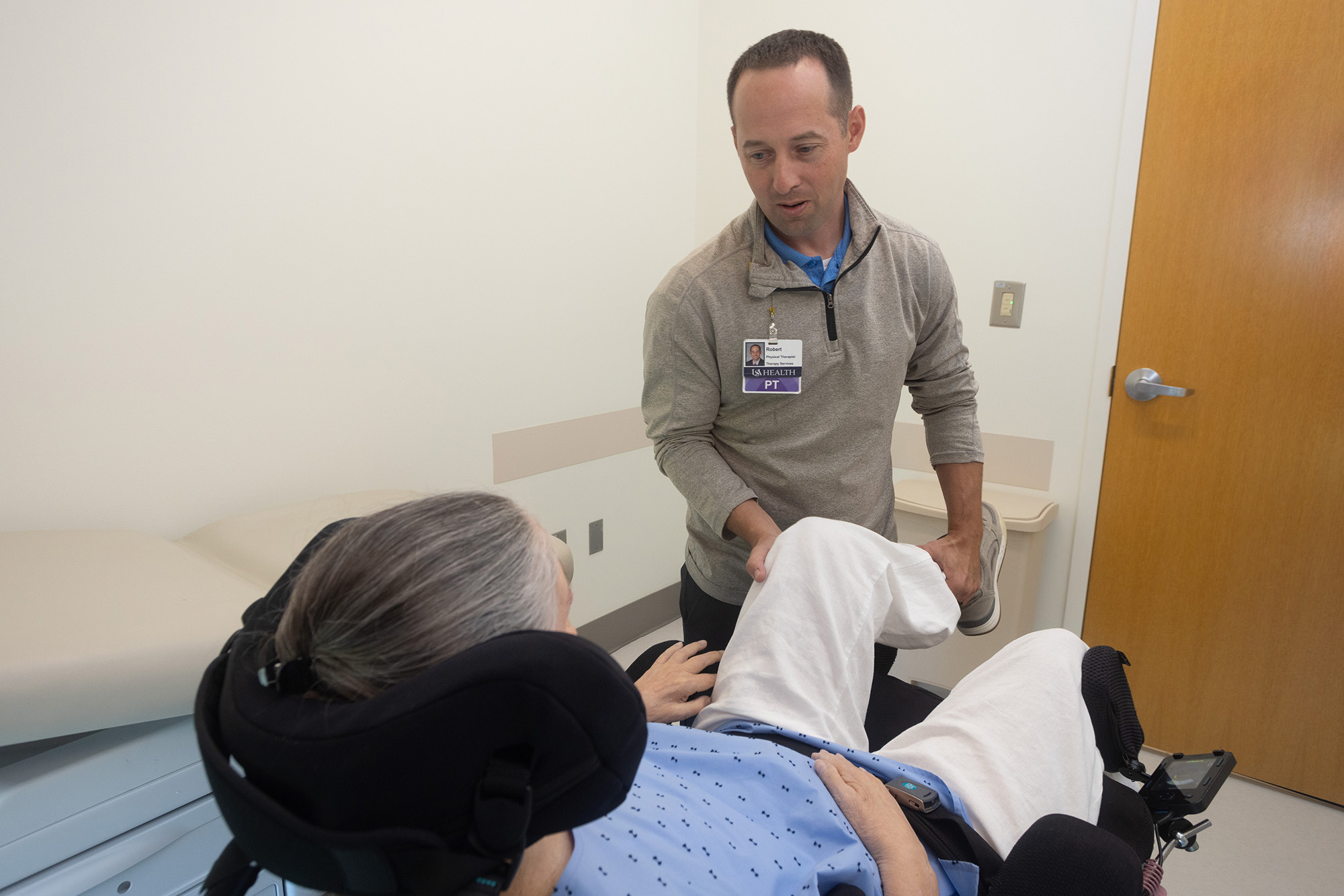
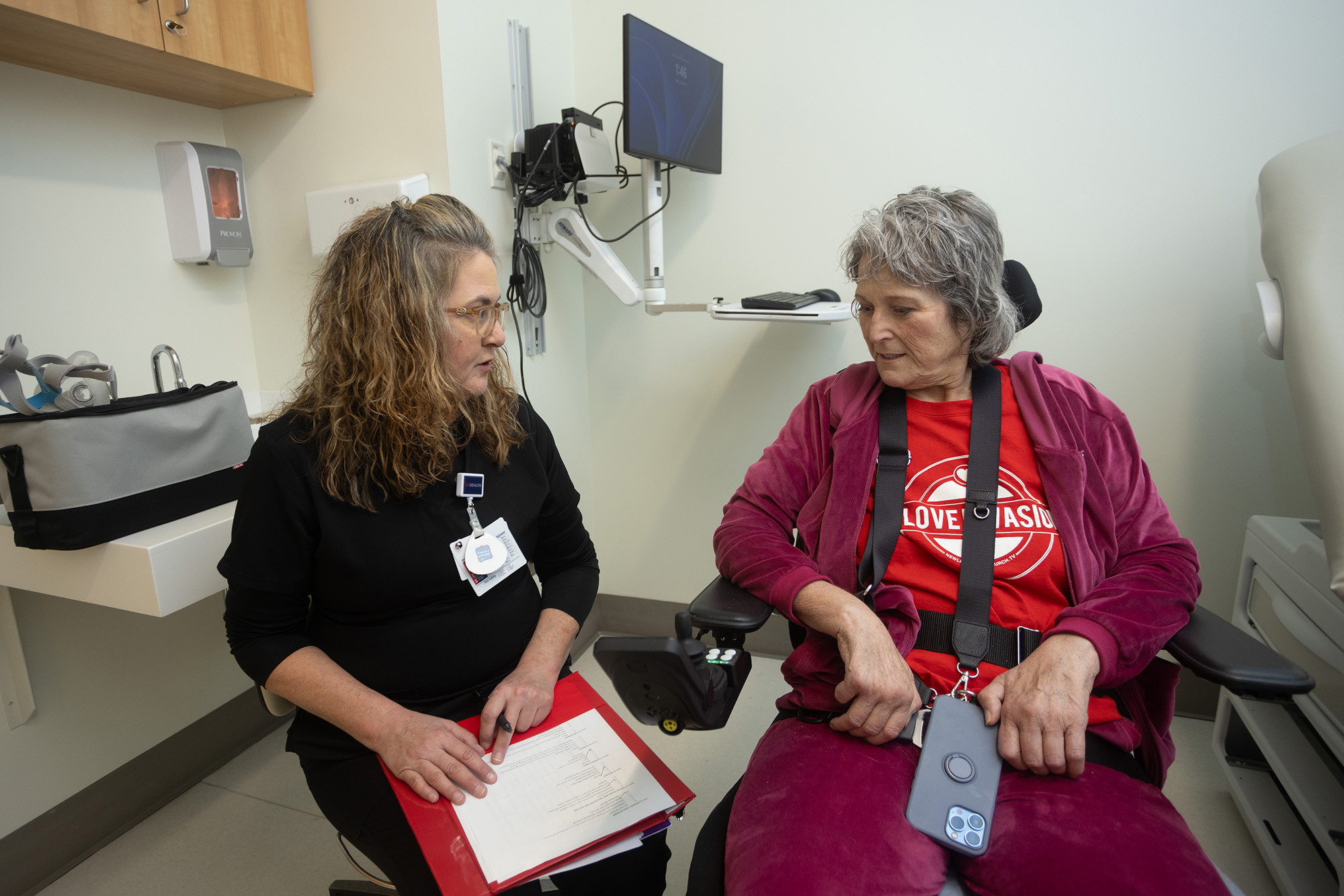
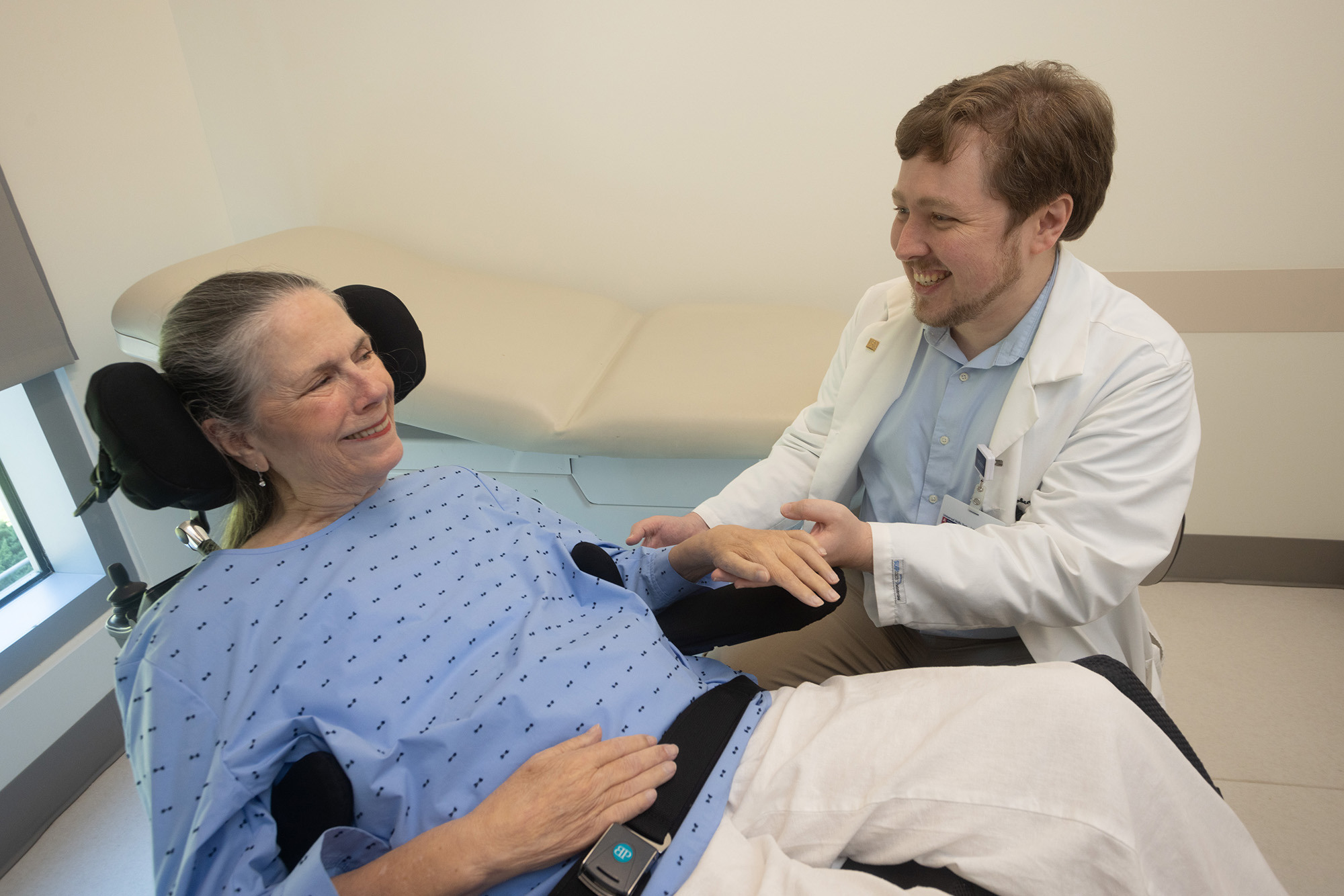
Your appointment will last approximately four hours. The nurse will get your vital signs and walk you through the ALS-FRS form. The neurologist will check your neurological function and monitor your disease progression. The physical therapist and occupational therapist will look at your balance, strength, and range of motion, and they will review your activities of daily living. The speech-language pathologist will assess your communication and swallowing. The respiratory therapist will evaluate your breathing and pulmonary function. The social worker will help to connect you with community resources, discuss financial matters, and provide psychosocial support. The dietitian will evaluate your weight and nutritional needs.
Preparing for your appointment
This is a long appointment, and it can be easy to forget questions you wanted to ask and concerns you wanted to address. It can be helpful to write these down ahead of time, as you think of them, so you can refer to them during the appointment.
Other items to bring:
A notebook (to write down information during the appointment)
Medication list (include dosages)
A water bottle and/or snack
Self care
We know that this time will be stressful and quickly can become overwhelming. There is no right or wrong way to be feeling right now. You may feel angry, sad, scared, confused, or have no idea how you feel at all.
The multidisciplinary care team
Learn about the healthcare providers who will meet with you during your appointment.
Neurologist: Medical doctor who specializes in diseases of the muscles and nerves and who is committed to treating ALS.
Nurse: Navigates the coordination of the multidisciplinary team and the patient’s needs.
Respiratory Therapist (RT): Assesses breathing and pulmonary function.
Physical Therapist (PT) and Occupational Therapist (OT): Work together to evaluate your balance, strength, range of motion, and activities of living (how you take care of yourself). OT focuses on hands and upper body, while PT focuses on torso and legs.
Speech-Language Pathologist (SLP): Will assess your communication and swallowing.
Social Worker (SW): Helps connect you with community and financial resources, as well as psychosocial support, and serves as an advocate for you. Can help you with advanced care and end-of-life planning.
Mental Health Professional: Assesses psychosocial needs and potential cognitive deficiencies.
ALS Association Liaison: Will help identify and link you with resources available through the ALS Association.
Dietitian (RD): Monitors your nutritional needs and provides recommendations on supplementation, tube feeding, etc.
Coping with the diagnosis
Coping with an ALS diagnosis is different for every individual. There is no right or wrong way to feel when you hear the news of your diagnosis.
Receiving the diagnosis of ALS may trigger a wide range of emotions, including fear, anger, loss, sadness and depression. It is essential to maintain a balance between a sense of hope and realistic expectations.
Empower yourself to learn everything you can about ALS and how it will affect you. It is important to meet with your ALS specialist and multidisciplinary team to discuss any anxiety or concerns you may have regarding information you may have found.
Coping with ALS day-to-day
Take time to adjust. The diagnosis can be shocking. Take time to absorb all of the information and allow yourself time to work through your emotional reactions. Denial, anger, sadness and grief are all common and normal reactions.
Be hopeful. Attitude is everything. ALS is not your entire identity, only a part of your life. Think beyond physical changes. Foster deeper connections with your family and friends.
Seek early treatment. Ignoring problems can make a situation more difficult.
Take charge of your care. You are the most important part of the care team. Healthcare professionals and family can help make decisions, but you are in charge.
Engage family and friends. Keep lines of communication open and express your feelings freely. Encourage family and friends to express their feelings as well.
Find support groups. Both you and your family or caregiver may benefit from a support group. Your care team can help you find a group if you are interested.
Plan ahead. Work with your care team to formulate plans for end-of-life care, including the care options you prefer and those you do not.
About Kelly Butler
Kelly Butler devoted his career to the State of Alabama until complications associated with ALS led to his retirement.
When he announced in 2021 that he would step down as finance director, Butler said, “Looking ahead, I’m going to do everything humanly possible to help the doctors and researchers find a cure for ALS so that one day, this becomes a disease that people talk about in the past.”
Butler continued to serve the state in an advisory role, but he took up another cause in the fight against ALS. In 2023, he received the Impact Award from the ALS Association in recognition of his work to support the organization’s mission, which is to discover treatments and a cure, to advocate for those with the disease, and to build hope and enhance quality of life.
The USA Health Kelly Butler ALS Center recognizes Butler’s service to the state and the ALS community. Through its multidisciplinary approach, the center will expand access to treatment through specialized care that is convenient, comprehensive and compassionate.
Kelly Butler ALS Center Physicians
The multidisciplinary team of providers at the Kelly Butler ALS Center includes highly skilled neurologists with expertise in ALS and other neurological conditions.
The symposium offers an opportunity to learn practical, evidence-based approaches, share experiences with colleagues and take that knowledge back to patients and practices.
Tarek I. Lawen, M.D., MSc, will treat prostate, kidney, ureter, bladder, testicular and penile cancer. He will also evaluate adrenal masses and other complex urologic tumors when surgical management is needed.
The USA Health Mitchell Cancer Institute’s Think Pink Tea is a free celebration of breast cancer awareness — a commitment to patients, survivors, advocates, and the friends and family of those impacted by breast cancer.
Nov122026
USA Health is excited to announce Partners in Healing, a new fundraising event that will bring together first responders, healthcare professionals, community leaders, and philanthropic supporters at Crown Hall.
Feb182027
Doc Rock is a “battle of the bands” style event at the Soul Kitchen in downtown Mobile where at least one member of each band has an affiliation with USA Health. Proceeds benefit research and critical clinical needs at USA Health.
Mar42027
The Antiques & Garden Show is a curated event of antiques, design, and inspired living, bringing together renowned designers, artisans, and lifestyle experts for a one-of-a-kind experience.
Dec312027
Our calendar lists special events and regularly scheduled classes separately. To display a list of upcoming classes, select the "Classes" option above or visit Events, Classes and Support Groups at USA Health.
Culinary medicine strives to join the science of nutrition with the art of food preparation to make dishes that are not only good for us but also unapologetically delicious.
See event details for class times and topics.
Oct122026
Culinary medicine strives to join the science of nutrition with the art of food preparation to make dishes that are not only good for us but also unapologetically delicious.
See event details for class times and topics.
Oct132026
Culinary medicine strives to join the science of nutrition with the art of food preparation to make dishes that are not only good for us but also unapologetically delicious.
See event details for class times and topics.
Oct132026
We offer a series of three childbirth classes. You may sign up for all the classes or sign up for the ones that interest you the most.
See event details for class topics.
Oct142026
Expectant moms can tour many of the birthing areas at USA Health Children’s & Women’s Hospital on Wednesdays.