Cardiovascular disease fellow publishes review in national journal
In the review, Sayaideh and his co-authors analyzed contemporary research and clinical experience to develop a practical, operator-focused framework for recognizing and responding to different types of valve migration.
By Michelle Ryan-Day
[email protected]
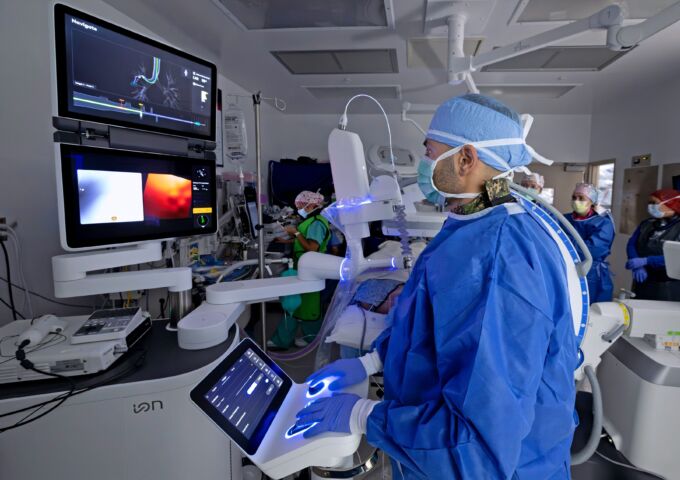
USA Health cardiovascular disease fellow Mohammad As Sayaideh, M.D., recently published a comprehensive review article in the Journal of the Society for Cardiovascular Angiography and Interventions (JSCAI), highlighting a rare but potentially life-threatening complication of transcatheter aortic valve replacement (TAVR) and offering a practical framework to help physicians manage it.
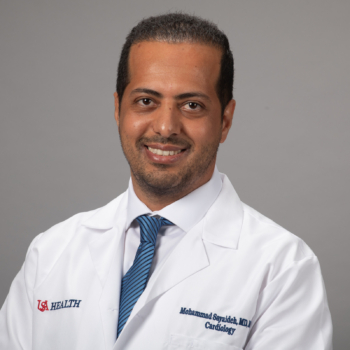
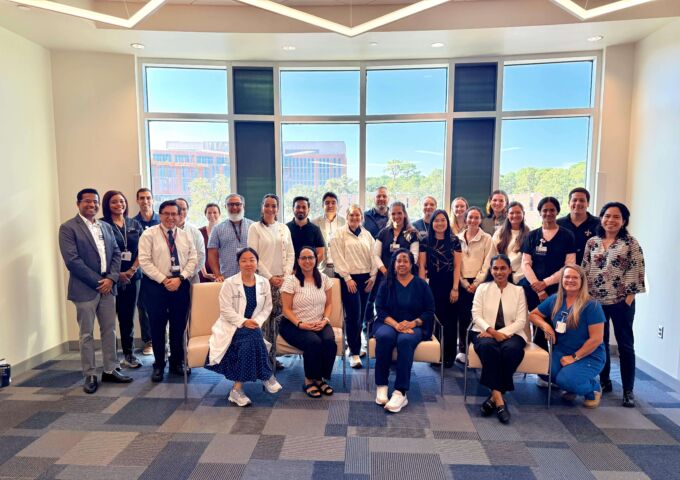
Published in June 2026, the article, "Transcatheter Aortic Valve Migration and Embolization During Transcatheter Aortic Valve Replacement: A Contemporary Management Review With a Practical Bailout Algorithm," represents a collaboration between cardiology faculty and trainees at the University of South Alabama, including USA Health.
TAVR has become a widely used, minimally invasive treatment for severe aortic stenosis, helping many patients avoid open-heart surgery. Although the procedure is considered safe and effective, one of its most serious complications occurs when the replacement valve moves from its intended position during or after implantation. This complication, known as transcatheter valve embolization or migration, occurs in fewer than 1% of cases but can quickly lead to severe aortic regurgitation, hemodynamic instability, coronary obstruction and other life-threatening consequences.
"Although valve migration and embolization are rare, they can be life-threatening and require rapid, coordinated decision-making,” Sayaideh said. “We wanted to create a practical resource to help cardiovascular teams recognize and manage this complication systematically."
In the review, Sayaideh and his co-authors analyzed contemporary research and clinical experience to develop a practical, operator-focused framework for recognizing and responding to different types of valve migration. The article categorizes migration events based on where the valve moves and outlines potential rescue strategies that interventional cardiologists can use in high-stakes situations.
The authors also developed a phenotype-based bailout algorithm designed to help physicians rapidly assess the complication, identify the greatest immediate threat to the patient and determine whether catheter-based rescue techniques or surgical intervention may be most appropriate.
"We hope it provides a clear, anatomy-based framework for managing a high-stress complication while supporting clinical judgment, teamwork, and timely decision-making," he said.
Sayaideh appreciates the importance of collaboration and mentorship found in an academic health system.
"I am especially grateful to my co-fellows; our Cardiology Fellowship Program director, Dr. Bassam Omar; our Interventional Cardiology Fellowship Program director, Dr. Kevin DeAndrade; and our chair of Internal Medicine, Dr. Nasser Lakkis, for their mentorship and support," he said.
JSCAI is the official, peer-reviewed Gold Open Access journal of the Society for Cardiovascular Angiography & Interventions. Launched in 2022, it publishes cutting-edge research, clinical guidelines, and expert consensus documents across all interventional subspecialties, and it provides a practical resource for structural heart specialists around the world.
The full article can be accessed here.