Cardiovascular disease fellow presents research at echocardiography conference
Deeksha Acharya, M.D., a cardiovascular disease fellow at USA Health, detailed the case of a 37-year-old man who suffered severe blunt chest trauma in a high-speed motor vehicle collision.
By Michelle Ryan-Day
[email protected]
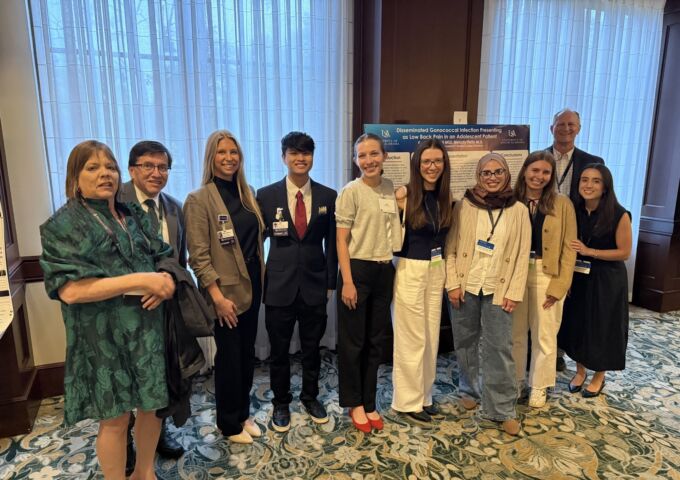
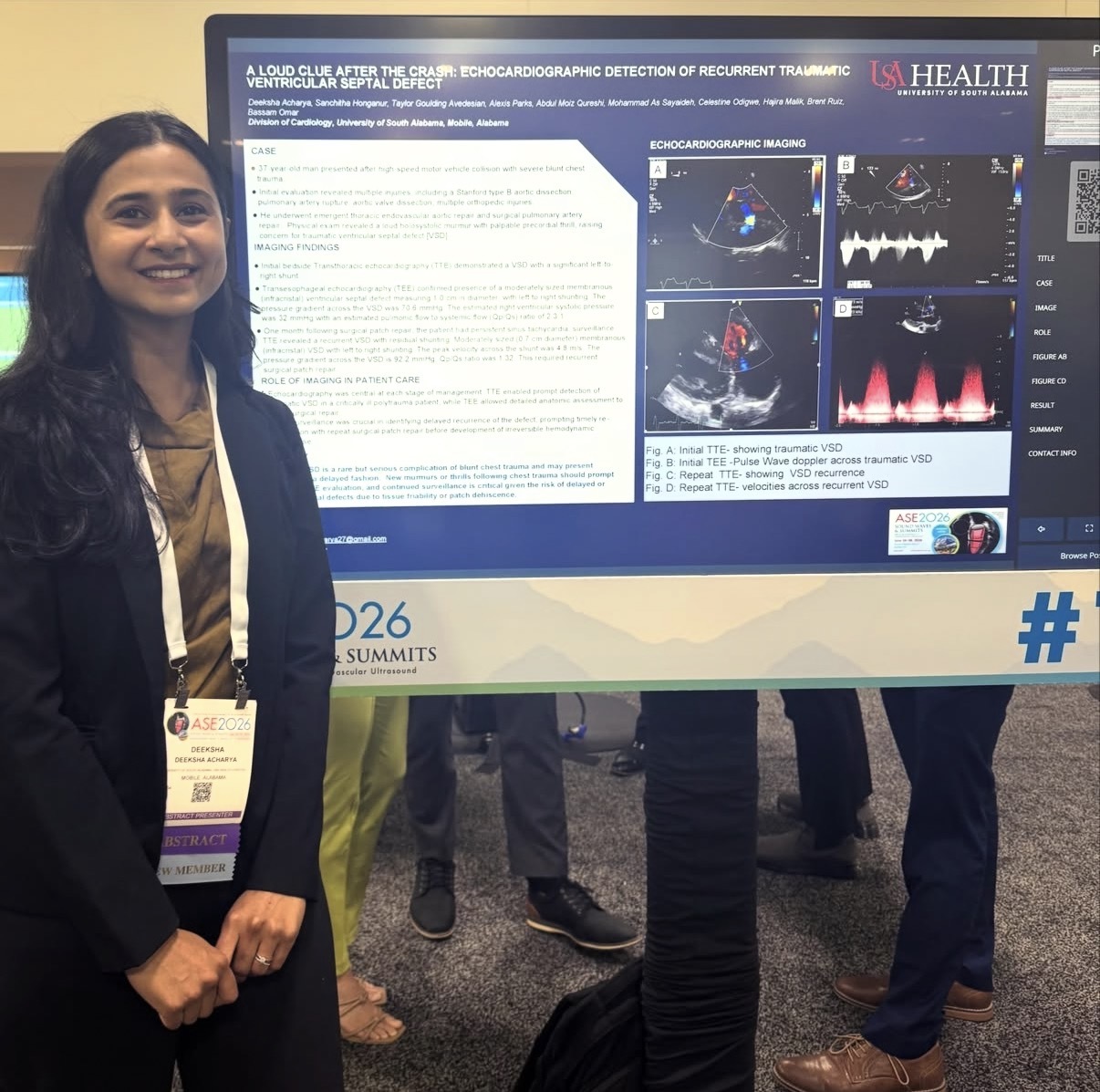
Deeksha Acharya, M.D., a cardiovascular disease fellow at USA Health, recently presented a research poster at the American Society of Echocardiography (ASE) 2026 Scientific Sessions, sharing a unique case that highlighted the critical role of echocardiography and clinical assessment in diagnosing a rare cardiac complication following traumatic injury.
The leading professional organization for cardiovascular ultrasound professionals, ASE serves physicians, sonographers, nurses, veterinarians, and scientists. The society advances the field through education, research, advocacy, and the development of practice standards aimed at improving patient care.
Acharya's poster, titled “A Loud Clue After the Crash: Echocardiographic Detection of Recurrent Traumatic Ventricular Septal Defect,” detailed the case of a 37-year-old man who suffered severe blunt chest trauma in a high-speed motor vehicle collision.
The patient initially presented with multiple life-threatening injuries, including a Stanford type B aortic dissection, pulmonary artery injury, and a traumatic ventricular septal defect (VSD) — a hole in the wall separating the heart's lower chambers. Following emergency surgical repair, the patient appeared to be recovering well.
However, during routine follow-up, a new systolic murmur was detected during a bedside physical examination. Further evaluation with echocardiography revealed a recurrent VSD caused by friable tissue at the repair site. The finding prompted timely surgical intervention before the patient developed irreversible complications.
“My poster was an interesting case on recurrent traumatic ventricular septal defect (VSD) after a motor vehicle collision,” Acharya said. “The key highlight of the case was how a basic physical exam, where a bedside murmur was identified, combined with echocardiographic diagnosis helped us identify this key finding in the patient and helped them obtain timely care through surgical repair.”
The case also detailed an important consideration for clinicians treating traumatic cardiac injuries.
“It also highlighted the point of how sometimes a VSD can recur post repair due to friable tissue and brought about awareness regarding this particular fact for future considerations in similar scenarios,” she said.
For Acharya, the conference marked an important milestone in her training as a cardiology fellow.
“This was my first fellowship-specific conference, and I appreciated it even more because it was directly relevant to my training,” she said. “Echocardiography is a fundamental skill in cardiology, and attending a conference dedicated to echo provided valuable clinical pearls.”
In addition to presenting her research, Acharya was encouraged by discussions surrounding emerging technologies in cardiovascular imaging.
“One of the highlights of the conference was the strong focus on artificial intelligence and its growing role in echocardiography,” she said. “It was exciting to see how AI is transforming image interpretation, improving workflow and shaping the future of cardiovascular imaging.”