Think Pink Tea puts survivors and supporters center stage, hand in hand
The USA Health Mitchell Cancer Institute closed out Breast Cancer Awareness Month by hosting an event that allowed survivors to step into the spotlight.
By Amanda Gibson
[email protected]
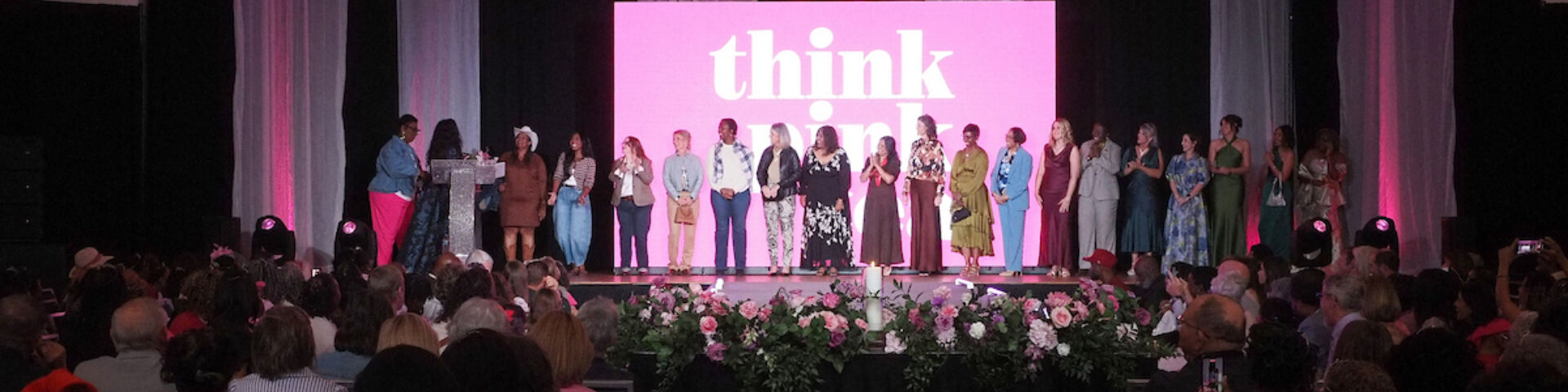
Breast cancer survivors, family and friends, and healthcare professionals gathered Sunday, Oct. 25, for the USA Health Mitchell Cancer Institute’s 16th annual Think Pink Tea at the Arthur R. Outlaw Mobile Convention Center that featured a runway fashion show and educational panel. This year’s theme, “Honoring the Hands That Hold Us,” celebrated the caregivers, loved ones and medical teams who support patients through diagnosis, treatment and survivorship.
A look at every side of the patient journey
Moderator Jennifer Pierce, M.D., MPH, opened the expert panel with the staggering words that 1 in 8 women will hear in their lifetime: “You have breast cancer.” Over the next two hours, MCI experts, caregivers and survivors each shared their own perspective on what comes after that diagnosis.
The panel addressed the questions patients often have swirling in their heads but don’t always ask out loud. What to do right after a diagnosis? Who needs radiation, and why are some patients now getting shorter courses or skipping it altogether? What should survivors watch for years down the road? When does treatment end and survivorship begin? And how do you live with the fear that cancer might come back without letting it run your life?
MCI Director Brian Persing, M.D., and radiation oncologist Adam Huddleston, M.D., brought the medical perspective, explaining treatment options and effects, the transition from treatment to survivorship, and how to live with the fear of recurrence. Oncology nurse navigator Wendy LaPorte, RN, BSN, spoke for the people who guide patients through the journey day to day. Cyndi Denmark, whose sister, Sheri, walked the Think Pink Tea runway in 2024, spoke for the caregivers.
Pierce closed by saying support comes in many forms: a clear explanation, a ride to an appointment, a listening ear, or someone willing to sit silently beside you when there are no easy words.
Rachel Hunter, M.D., a breast surgical oncologist at USA Health and assistant professor of surgery at the Frederick P. Whiddon College of Medicine, also spoke to the audience about assessing their risk of developing breast cancer. For those identified as high risk, she explained, MCI offers “a formalized high risk screening clinic. We typically see these patients every six months to discuss risk-reducing strategies and conduct regular imaging.”
Remembering loved ones and honoring a legacy
Pierce then led a poignant candle-lighting ceremony in memory of those the disease took too soon, followed by a retirement tribute to MCI patient services coordinator Cathy Tinnea. For a woman who spent almost four decades helping oncology patients to their feet, it was fitting that Tinnea’s MCI tenure ended with her own walk down the runway, escorted by family members John and Carrie Hyland.
“The tribute touched my heart,” Tinnea said. “Serving at MCI for almost two decades gave me the opportunity to care for and serve so many patients and their families during their cancer journey. It has been such a blessing in my life.”
Survivors take the spotlight
Award-winning journalist Kelly Finley, a former Mobile news director and anchor, took the stage to emcee the fashion show. One by one, MCI breast cancer survivors, outfitted in fall fashions supplied by Ballin’s LDT and Belk, walked the runway to delighted cheers from family, friends and fellow survivors.
Finley shared the story of each survivor’s diagnosis and those who stood beside her along the way. Each story was different, but together they showed the many paths a breast cancer journey can take and the courage each woman brings to hers.
Many spoke of learning to lean on faith and the people around them, being honest about what they need in the moment, and accepting help when it’s offered. One added a practical tip that drew knowing nods from the room: “Above all, stay off Google.” Several reminded the audience that “cancer does not define a person, and the future is still yours to write.” All of them shared the same current of hope that “even in the middle of the storm, brighter days are ahead.”
Finley closed the program by thanking the sponsors, Toyota West Mobile and the Red Bar in Grayton Beach. Guests stayed afterward to visit with friends, browse vendor tables and line up at the photo booth.
It was, in the end, exactly what the theme promised: an afternoon spent celebrating the courage and resilience of those who had heard those four words spoken to them — or who had stood beside someone who did.