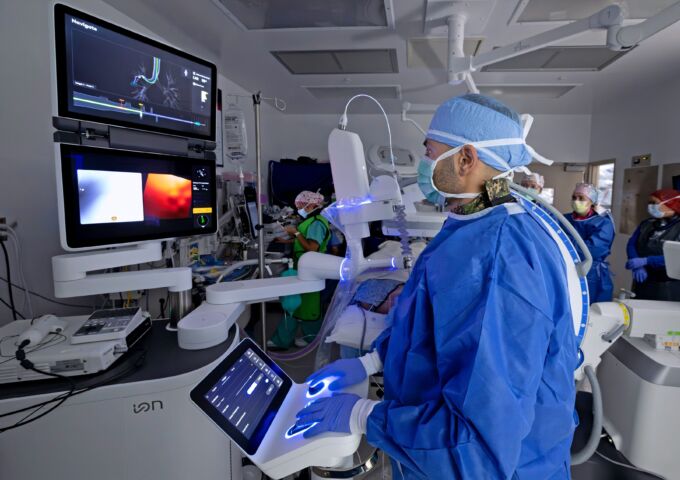
USA Health Spine Institute team participates in national Safety in Spine Surgery Summit
“It’s a tremendous meeting — a real opportunity to share with other high-performing teams what we’re building at USA Health and, just as importantly, to bring the best ideas from across the country back home,” said Richard Menger, M.D., MPA, director of the USA Health Spine Institute.
By Carol McPhail
[email protected]
Faculty and advanced practice providers from the USA Health Spine Institute recently attended the 11th Annual Safety in Spine Surgery Summit in New York City, where research from USA Health was featured and was part of the academic syllabus.
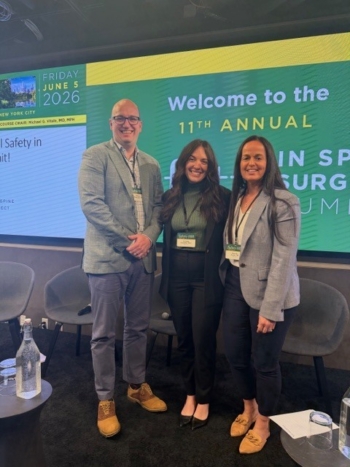
The team included Richard Menger, M.D., MPA, director of the Spine Institute and vice chair of neurosurgery at the Frederick P. Whiddon College of Medicine at the University of South Alabama; Chelsea Lukenbill, PA-C, a physician assistant; and Nikki Chason, CRNP, who serves as lead advanced practice provider for neurosurgery.
“It’s a tremendous meeting — a real opportunity to share with other high-performing teams what we’re building at USA Health and, just as importantly, to bring the best ideas from across the country back home,” Menger said.
Their work, titled “Delays from Utopian to Actual Discharge in Spine Surgery Patients: A Quantitative Analysis and Narrative Modeling,” was accepted and featured as an e-presentation at the meeting. The project was supported by funding from the 2025 Medical Student Summer Research Program at the Whiddon College of Medicine and led by Connor Holm, now a rising second-year medical student.
The annual summit is organized by the Safety in Spine Surgery Project (S3P), which aims to enhance the quality, safety and value of spine surgery through research, development of best practices, education, and by advancing a systems-based approach to optimize patient outcomes and care delivery.
“At the summit, we learned from the best programs in the country,” Menger said. “Now we’re implementing those proven best practices here at the USA Health Spine Institute to further raise the bar on safety and outcomes for our patients. It's a team-based approach.”