Local leaders recognize USA, USA Health during Sickle Cell Awareness Month
USA Health and the local chapter of the Sickle Cell Disease Association established a partnership in 1981 to help educate the public and provide life-extending care to those with sickle cell disease in the Mobile area and beyond.
By Michelle Ryan-Day
[email protected]
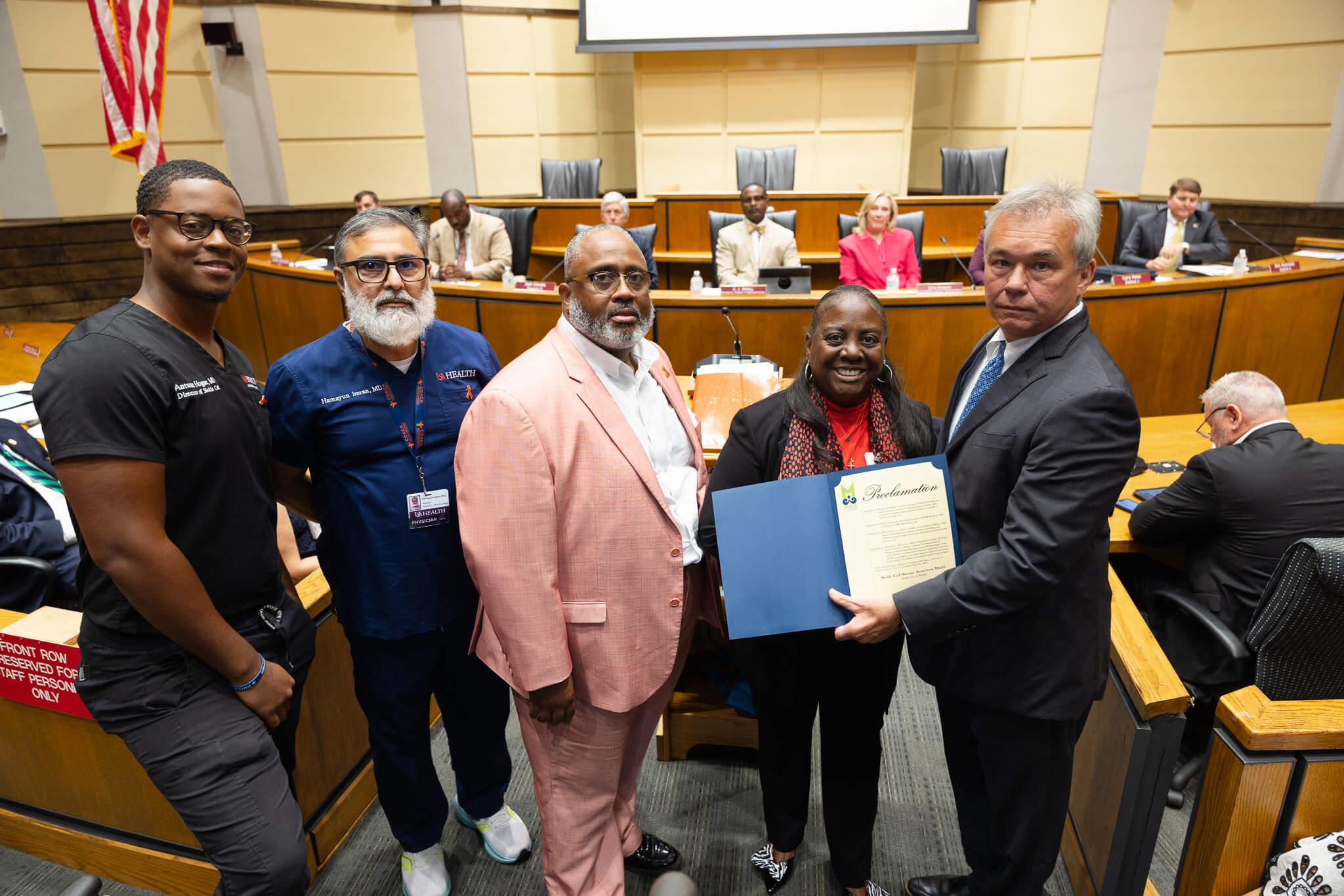
During National Sickle Cell Awareness Month in September, the City of Mobile issued a proclamation to faculty of the University of South Alabama, including USA Health, recognizing the numerous contributions that have been made to the community.
Representatives of USA’s Johnson Haynes Jr., M.D., Comprehensive Sickle Cell Center, including director Ardie Pack-Mabien, Ph.D., FNP-BC, medical director Antwan Hogue, M.D., and Hamayun Imran, M.D., division chief of pediatric hematology and oncology, accepted the proclamation from James Barber, chief of staff for the city, during a recent city council meeting.
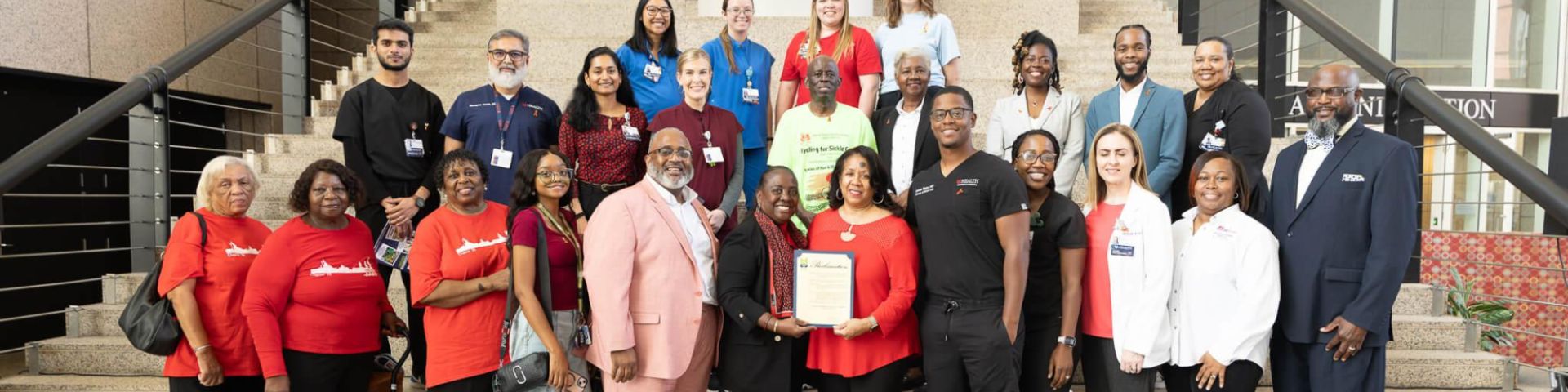
Many other representatives from USA Health and the Sickle Cell Disease Association of America, Mobile Chapter, also attended.
“We thank the Johnson Haynes Jr., M.D., Comprehensive Sickle Cell Center at the University of South Alabama, USA Health Department of Pediatrics Hematology/Oncology, and the Mobile Chapter of the Sickle Cell Disease Association of America for working to provide comprehensive care and support to sickle cell patients in Mobile,” the proclamation read.
The sickle cell center, founded in 1980, and the local Sickle Cell Disease Association chapter, established in 1976, created a partnership in 1981.
“As a comprehensive sickle cell center, our mission is to improve the lives of those affected by this disease through comprehensive clinical care, basic and clinical research, and patient and professional education,” Pack-Mabien said. “Improving awareness of sickle cell disease educates the general public, emphasizes the importance of screening for sickle cell disease and sickle cell trait, and increases support for funding of sickle cell centers and community-based organizations and initiatives at the local, state, and federal level.”
The academic health system and the local sickle cell chapter work together to help educate the public and provide life-extending care to children and adults with sickle cell disease in the Mobile area, Gulf Coast, and surrounding counties.
Gerald Alfred, executive director of the Mobile chapter of the Sickle Cell Disease Association of America, said that relationship is critical to continuing the mission of the local chapter and supporting those with sickle cell disease.
“The USA Health Johnson Haynes Jr., M.D., Comprehensive Sickle Cell Center offers the specialized medical expertise families need, while our chapter extends that care into the heart of the community,” he said. “Together, we close the gap between what happens in the clinic and what families face in their daily lives — providing counseling, case management, transportation, education, and advocacy.”
Sickle cell disease refers to a group of inherited disorders in which a person inherits two abnormal genes and the body produces abnormally shaped red blood cells that resemble a crescent or sickle. It impacts about 100,000 Americans and an estimated 5,000 Alabama residents.
In addition to the proclamation, the lights of the RSA tower in downtown Mobile were illuminated red on Sept. 13 to recognize Sickle Cell Awareness Month. Various open houses, fundraising events, and an annual blood drive were also held.
Laventrice Ridgeway, Ed.D., LPC, NCC, associate dean of student affairs at USA’s Frederick P. Whiddon College of Medicine, echoed the importance of raising awareness of sickle cell disease in the community.
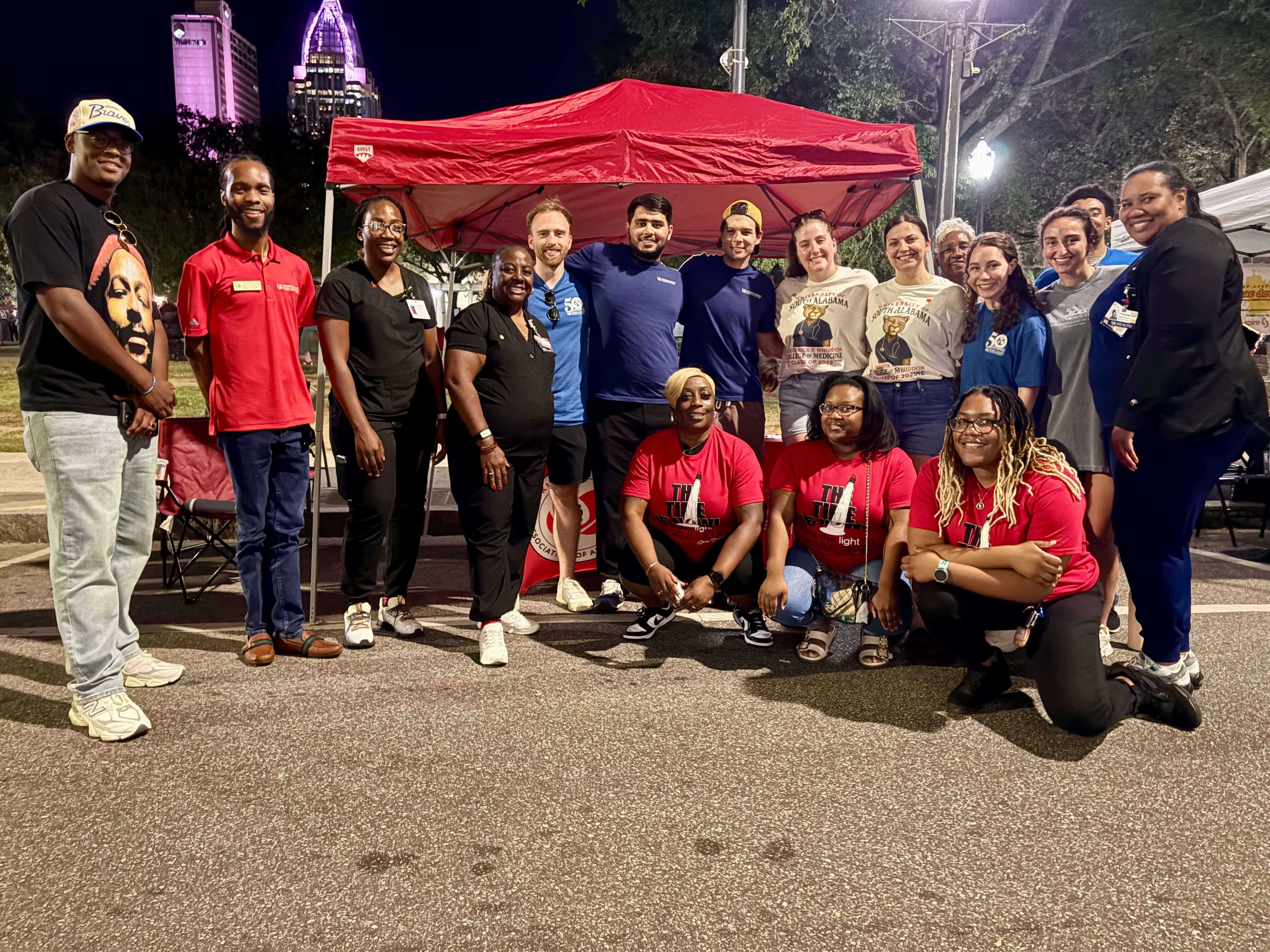
Along with the center and local chapter, Ridgeway and members of the Whiddon College of Medicine’s Wellness Council took the message of awareness to the monthly ArtWalk in downtown Mobile. They staffed a booth that featured tricycles, which have been used in TriSickle for Sickle Cell fundraisers.
“It is vital that multiple organizations work together toward the goal of raising SCD awareness. The complex, multi-faceted nature of SCD — which involves medical, social, economic, and systemic challenges — urges a collaborative, all hands-on deck approach,” Ridgeway said. “Collaborative approaches to awareness allow a single, strong message to reach a far wider audience, which is essential for high-level advocacy.”