USA scientist awarded national grant to uncover triggers for inflammatory reactions
The research project aims to uncover the biological triggers of inflammatory reactions, with a particular focus on the immune cells that drive them.
By Casandra Andrews
[email protected]
With a goal of providing new insights aimed at helping patients with cancer and autoimmune diseases avoid and better treat first infusion reactions (FIR), University of South Alabama scientist Michael R. Elliott, Ph.D., recently received a two-year R21 grant for $431,147 from the National Institute of Allergy and Infectious Diseases.
“Antibody-based therapies are among the most powerful tools for treating cancer and autoimmune diseases,” he said. “Yet for some patients, the very first infusion of these therapies can trigger inflammatory reactions ranging from mild discomfort to severe complications.”
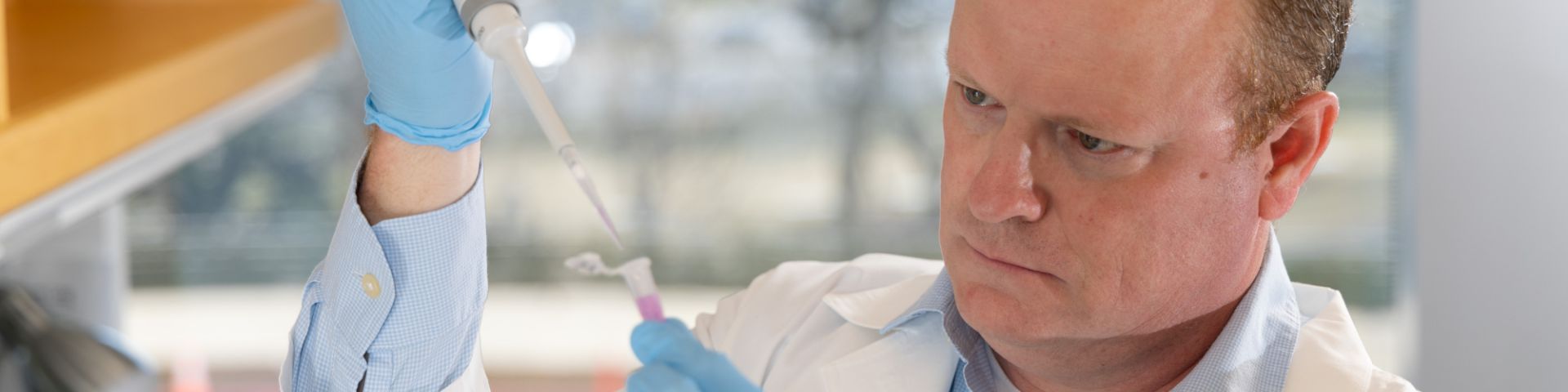
Elliott serves as an associate professor in the Department of Microbiology and Immunology at USA’s Frederick P. Whiddon College of Medicine.
His research aims to uncover the biological triggers of inflammatory reactions, with a particular focus on the immune cells that drive them. By identifying the underlying mechanisms, he hopes to make these therapies not only safer but also more widely accessible to patients.
With some patients, the initial infusion of antibody-based therapies is frequently associated with the rapid onset of chills, fever, hypotension, shortness of breath, and rash. These first infusion reactions range in severity, with most patients recovering with clinical support within hours to, in rare cases, very severe responses that can result in hospitalization and death.
In this project, researchers will investigate the role of macrophages in producing inflammatory cytokines during FIR and determine the major signaling mechanisms responsible for the induction of these cytokines. Ultimately, this work will provide important new insights aimed at avoiding and treating FIR in the context of immunotherapy.
Elliott received his Ph.D. from the Wake Forest University School of Medicine. His research focuses on innate immunity, macrophage biology, and cancer immunotherapy. His laboratory is located at the USA Health Mitchell Cancer Institute.