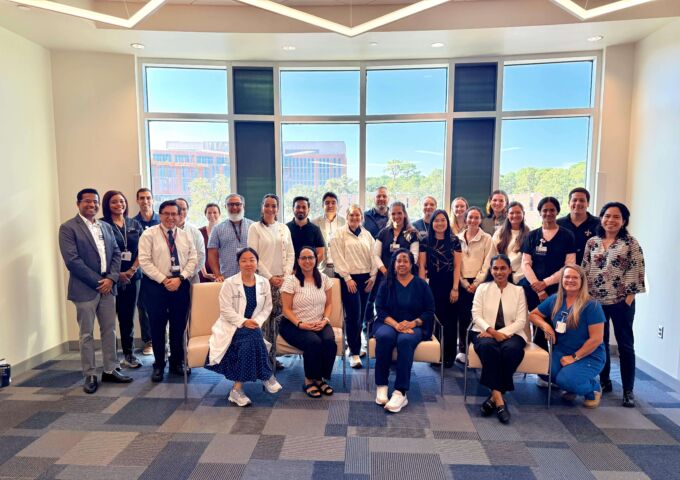

USA Health researchers present cancer prevention strategies at national conference
Both presentations were well received by conference attendees, reflecting growing national interest in mobile health models as a way to improve screening rates and address disparities in cancer outcomes.
By Jessica Jones
[email protected]
Researchers from USA Health Mitchell Cancer Institute (MCI) recently presented their latest work in cancer prevention and community outreach at the 50th Annual Meeting of the American Society of Preventive Oncology (ASPO) in Denver, Colorado.
Alyssa Lee, MPH, and Carrie McNair, MPH, research assistants with MCI’s Cancer Control and Prevention (CCP) team, presented three research posters highlighting innovative approaches to increasing cancer screening and prevention, particularly among underserved populations.
“Presenting at a national conference like ASPO allows our team to contribute to important conversations around cancer prevention while also learning from peers across the country,” said McNair. “Community-focused approaches like these are critical to improving access and outcomes, especially in underserved regions like Lower Alabama.”
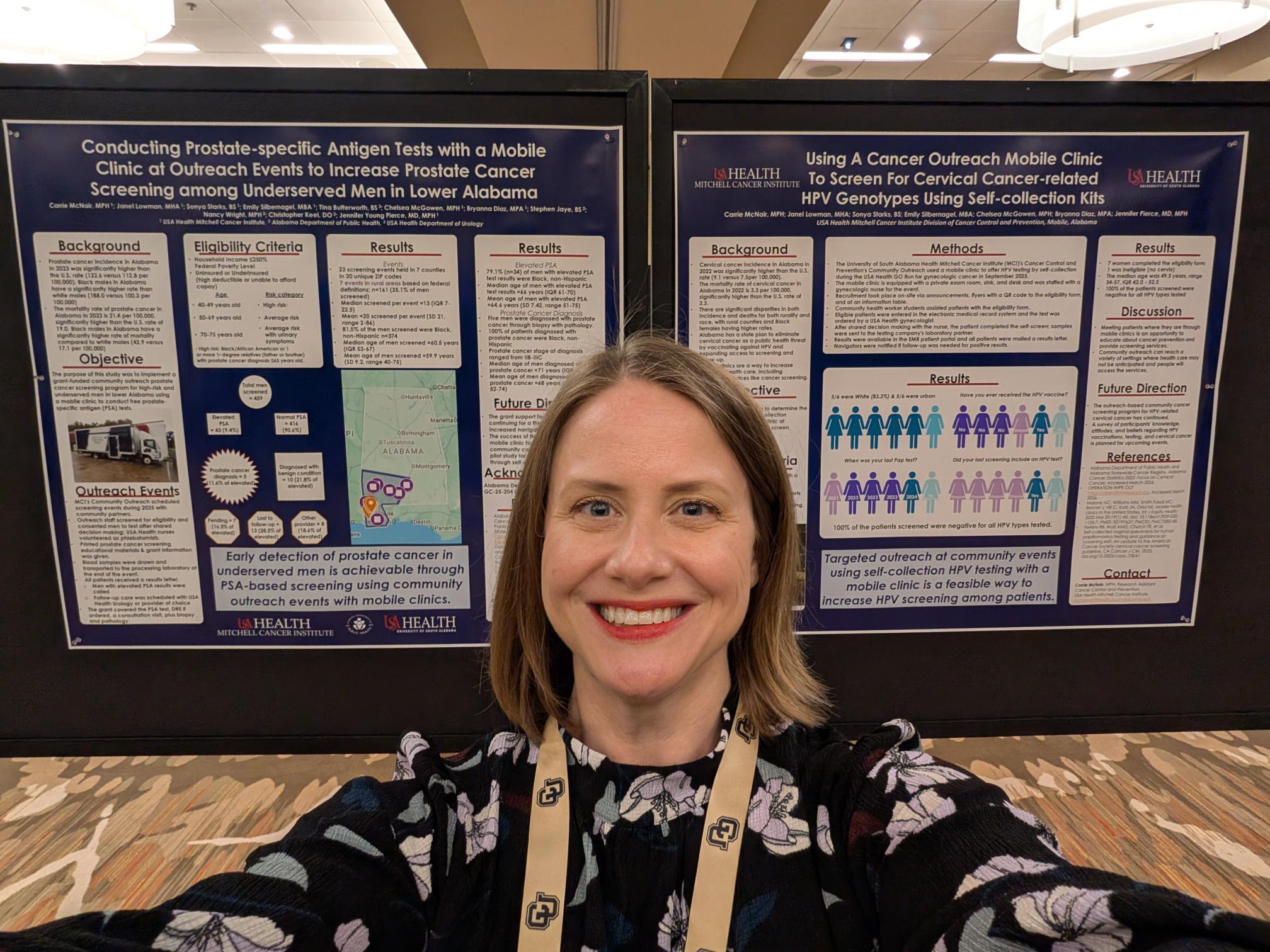
McNair presented two posters focused on the use of mobile clinics to expand access to cancer screening in community settings. Her presentations, “Conducting prostate-specific antigen tests with a mobile clinic at outreach events to increase prostate cancer screening among underserved men in Lower Alabama” and “Using a cancer outreach mobile clinic to screen for cervical cancer-related HPV genotypes using self-collection kits,” explored practical strategies to reduce barriers to care.
Both presentations were well received by conference attendees, reflecting growing national interest in mobile health models as a way to improve screening rates and address disparities in cancer outcomes.
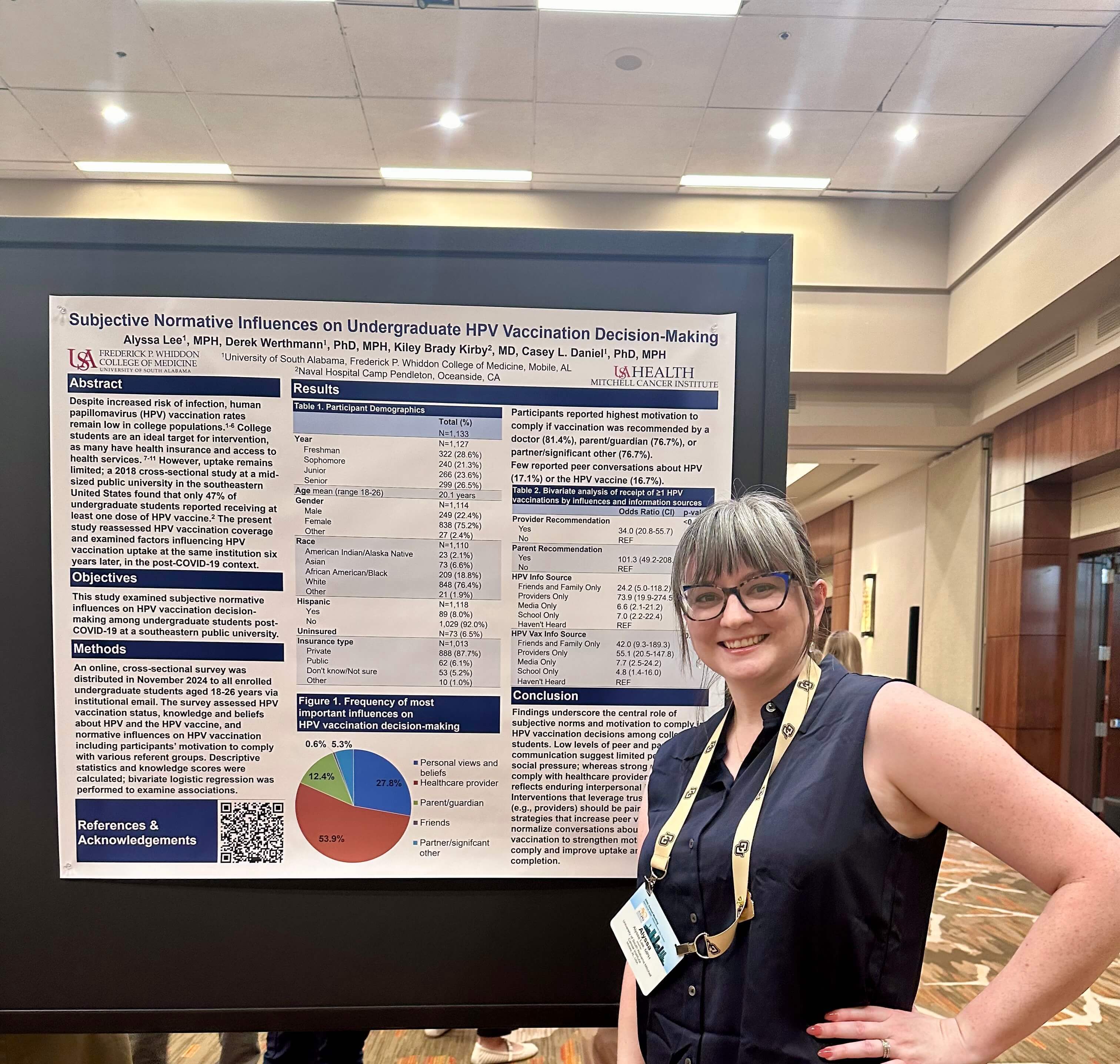
Lee presented “Subjective normative influences on undergraduate HPV vaccination decision-making,” which examines social and behavioral factors that influence vaccination uptake among young adults.
“Engaging with researchers from across the country reinforced how important it is to tailor prevention efforts to the communities we serve,” said Lee. “It’s encouraging to see growing momentum around approaches that meet people where they are and make screening and prevention more accessible.”
The ASPO annual meeting brings together researchers, clinicians, and public health professionals to share advancements in cancer prevention, early detection, and control.