USA Health stroke team shares research at International Stroke Conference
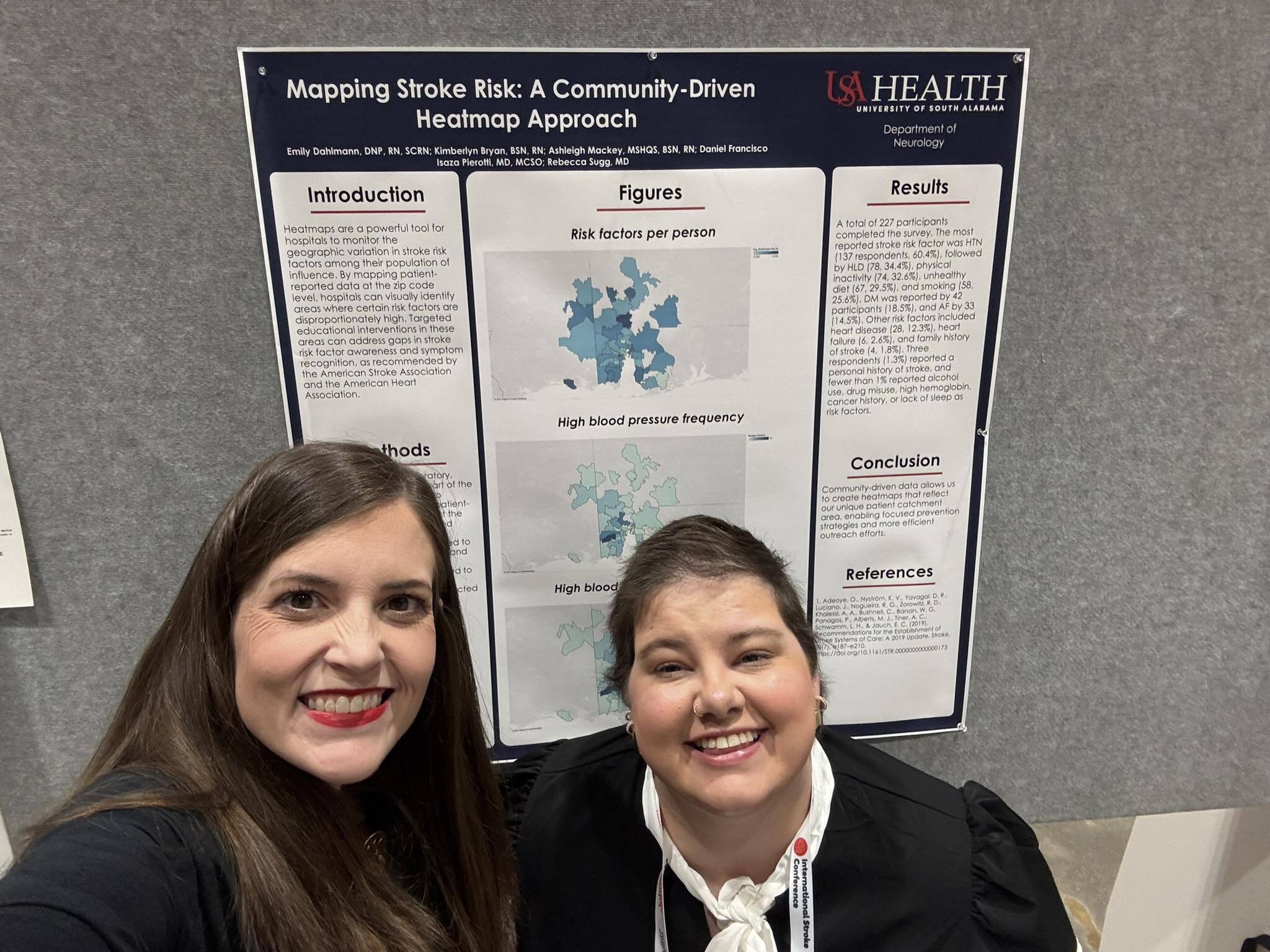
The USA Health Stroke Program presented research using heatmap technology to visualize where stroke risk factors are most concentrated across the health system’s catchment area. The analysis revealed that hypertension and high cholesterol were the two most prevalent — and modifiable — risk factors among participants.
By Michelle Ryan-Day
[email protected]
The USA Health Stroke Program recently presented innovative research at the International Stroke Conference 2026 in New Orleans, where thousands of clinicians, researchers and health leaders from around the world gathered to discuss the latest advances in stroke care, treatment and prevention.
Hosted by the American Heart Association and American Stroke Association, the International Stroke Conference is the world’s premier gathering dedicated to advances in stroke research, treatment and prevention. This year’s event brought together thousands of clinicians, researchers and health leaders from around the globe to share emerging science and best practices in stroke care.
During the conference, USA Health’s stroke team presented research using heatmap technology to visualize where stroke risk factors are most concentrated across the health system’s catchment area.
The analysis revealed that hypertension and high cholesterol were the two most prevalent — and modifiable — risk factors among participants. Most individuals had at least two to three risk factors for stroke. In contrast, lower rates of smoking and diabetes were reported compared with other risk factors.
“Our research indicated that hypertension and high cholesterol were the top two most prevalent risk factors for stroke in our hospital's catchment area,” said Emily Dahlmann, DNP, director of the USA Health Stroke Program.
By mapping risk factors geographically by ZIP code, the team aims to better direct education and outreach efforts to the communities where they are needed most.
“We plan to accomplish this by targeting specific education in those ZIP codes to see if it helps reduce the burden of stroke,” Dahlmann said. “We also want to partner with the community for their input on the best way to provide education. Historically, we’ve always assumed that the way we currently provide education is the best way, but there could be an opportunity here to close the gaps and improve health literacy.”
For Ashleigh Mackey, USA Health Stroke Program coordinator, attending the conference was a meaningful professional milestone, but also a personal achievement because of her experience as a stroke and moyamoya disease survivor. Moyamoya is a rare, progressive cerebrovascular disorder in which the internal carotid arteries at the base of the brain narrow, restricting blood flow.
“It was my first time attending the conference, so I spent most of the time in awe of everything and everyone. It is amazing to see how care of the stroke population evolves,” she said. “It was so enlightening to be able to listen to studies and doctors from all over the world speak on advancements in moyamoya and stroke care.”
Daniel Isaza, M.D., a neurology resident at USA Health, the academic health system for the University of South Alabama, said the conference highlighted the importance of collaboration in advancing stroke care.
“It was exciting to engage with clinicians, researchers, and stroke care professionals from around the world who are all focused on improving stroke prevention, treatment, and recovery,” he said. “The conference provided a great opportunity to learn about the latest advancements in stroke research and to exchange ideas with experts working on similar challenges.”
Like others on the stroke team, Isaza agreed that insights gained from the conference will help guide future work within the program.
“This research contributes to a broader effort to improve stroke care by identifying patterns and insights that can inform better prevention strategies and treatment approaches,” he said. “The findings help guide our program as we continue to focus on improving patient outcomes, strengthening clinical protocols, and identifying areas where additional research or resources may have the greatest impact.”