Beware of fake texts using USA Health leaders’ names
This is a scam called “smishing,” a combination of SMS messages and phishing. The messages are designed to trick recipients into responding and sharing sensitive information.
Several USA Health employees have received text messages from people claiming to be Natalie Fox or other members of USA Health’s leadership team. These messages are fraudulent and designed to trick recipients into responding or sharing sensitive information. This is a scam called “smishing,” a combination of SMS messages and phishing.
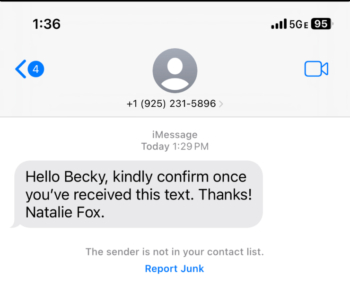
Important reminders:
- The sender’s number may look legitimate, but it is spoofed.
- Our leadership team will never request sensitive information or urgent actions via text message.
What should I do?
- Do NOT respond to these messages.
- Do NOT click any links or share personal or financial information.
- If you are unsure whether a message is legitimate, reach out to the alleged sender via official communications tools (Teams or Outlook email) to verify the message.
- Report suspicious texts as spam and block the number. (Details are provided below.)
How do I report spam messages?
- On some devices, you may receive an option at the bottom of the message to “Report Junk.”
- You also can use your carrier-specific security app — the AT&T ActiveArmor app, the T-Mobile Scam Shield app, or the Verizon Call Filter app.
- Another option is to forward the spam text message to 7726. You may receive an automated reply asking for the original sender’s number. If so, reply with that number.
How do I block a number?
- On an iPhone: Open the message, tap the sender, and click “Block Contact.”
- On an Android device: Open the message, tap the three dots in the upper-right corner, and click “Block and report spam.”