Center for Healthy Communities brings community partners together for Building Safer Spaces Workshop
The program serves youth referred through the Strickland Youth Center who are on informal probation, pairing them with community health workers who identify needs, connect families with services, and develop individualized plans to support long-term success.
By Michelle Ryan-Day
[email protected]
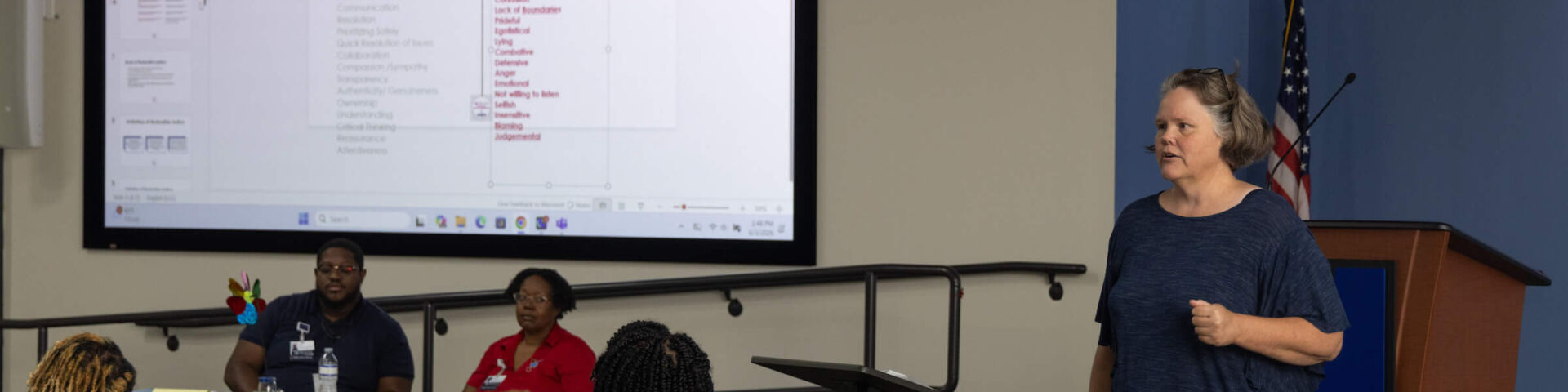
The USA Health Center for Healthy Communities (CHC) recently brought together educators, law enforcement professionals and community organizations for its Building Safer Spaces Workshop, an interactive training focused on restorative justice and trauma-informed care.
The three-hour workshop was part of the Building Safer Communities Collaborative, an initiative funded through a grant from the Alabama Department of Economic and Community Affairs. The program serves youth referred through the Strickland Youth Center who are on informal probation, pairing them with community health workers who identify needs, connect youth and families with services, and develop individualized plans to support long-term success.
Lynette Parker, M.A., research manager for CHC and an experienced restorative conferencing facilitator and trainer, led the restorative justice portion of the workshop. Participants learned principles focused on repairing harm, accountability and giving those affected by wrongdoing an active role in resolving conflict. They also practiced a restorative process known as the Restorative Circle, which encourages dialogue, understanding and collaborative problem-solving.
“I’ve seen the relief, validation and healing that someone who has been harmed by a criminal act can experience when they have the opportunity to tell their story, see the understanding from the one who caused that harm, and have a voice in how they want to move forward,” Parker said.
One of the collaborative's primary goals is to create a trauma-informed network of stakeholders who can help provide safety and support for youth at high risk of victimization or involvement in gun violence. Attendees included representatives from community-based organizations, Williamson High School, LeFlore High School and the Mobile Police Department.
“All of society has a role to play in helping youth feel safe,” Parker said. “The program partners with local community organizations to provide volunteer and prosocial experiences for the justice-involved youth in the program.”
The workshop also featured trauma-informed care training led by CHC's Community Health Worker team. Participants learned strategies for recognizing the effects of trauma and responding in ways that foster safety, trust and resilience.
Parker said justice-involved youth may have experienced violence, family instability, food or housing insecurity, and other challenges that can affect their ability to cope and self-regulate.
“They express the need for safe places where people help them process what they are experiencing and guide them to recognizing their truths,” she said.
Through the Building Safer Communities Collaborative, community health workers help create those safe spaces while connecting youth and families with resources and opportunities to strengthen relationships, build conflict-resolution skills and address social needs.