USA Health launches robotic thoracic surgery program
The benefits of robotic surgery include a shortened length of stay, less blood loss, reduced complications, and less post-operative pain.
By Carol McPhail
[email protected]
USA Health has expanded its robot-assisted surgical services with the addition of a robotic thoracic surgery program, which provides minimally invasive lung and chest surgery for patients.
Cardiothoracic surgeons Parker Mullen, M.D., and William Ricks, M.D., recently performed thoracic surgery using the da Vinci Xi robotic system at USA Health University Hospital and USA Health Providence Hospital. Both cases involved the removal of cancerous lung tissue.
With minimally invasive surgery, patients experience reduced trauma to the body and a quicker recovery.
“The robot allows for a more nuanced, individualized approach to surgery for people with lung cancer,” said Ricks, who recently returned to USA Health after completing a fellowship in cardiothoracic surgery at the University of Florida. “Robotic surgery is now the standard for these procedures.”
The robotic thoracic surgery program is the first of its kind for USA Health, the academic health system for the University of South Alabama.
“Our goal is to be the academic referral center for the region for thoracic procedures,” said Mullen, who recently rejoined USA Health after completing a cardiothoracic surgery fellowship at the University of Mississippi Medical Center.
Mullen said the da Vinci Xi robot can be used for lung, mediastinal (chest cavity) and esophageal surgery. With lung surgery, for instance, it enables the surgeons to make smaller incisions and preserve more lung tissue than is possible with traditional surgery, he said.
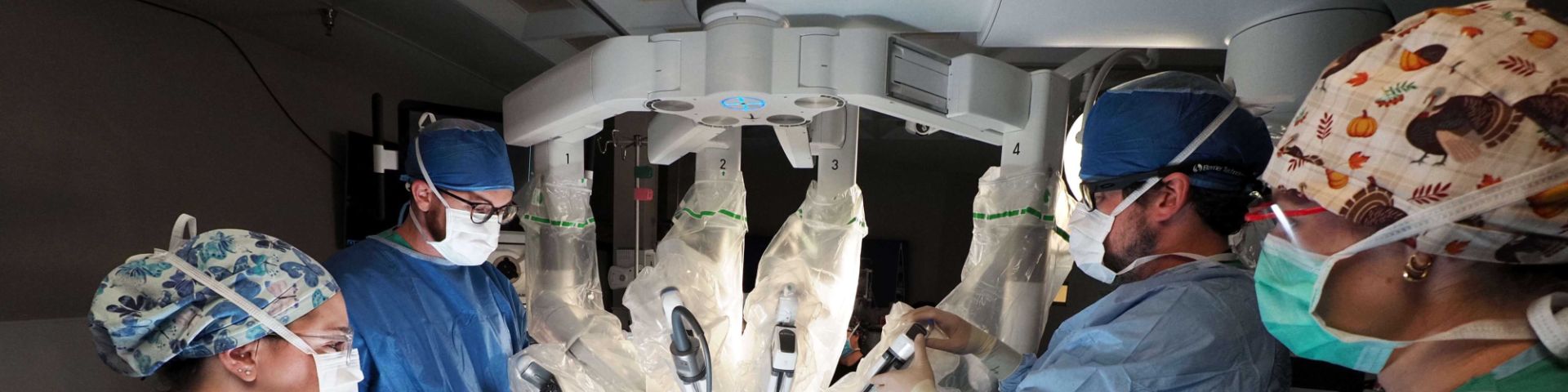
In the operating room, a surgeon controls the da Vinci Xi’s four tiny instruments from a console using magnified views of the surgery site. Robotic instruments move like a human hand but with greater precision and a greater range of motion. The benefits of robotic surgery include a shortened length of hospital stay, less blood loss, reduced complications, and less post-operative pain.
After adding two new robots in 2024, USA Health now utilizes six da Vinci Xi robot systems and one da Vinci SP (single port). They have been used in abdominal hernia, esophageal, gastrointestinal, colonic, hiatal hernia, cancer, urologic and gynecologic surgeries across the health system.