Special Barbies and stuffed bears donated for children with Type 1 diabetes
Local family gives more than 100 toys specially designed for diabetic patients
By Casandra Andrews
[email protected]
Charlotte “Charlie” Thompson was 3 when she was diagnosed with Type 1 diabetes (T1D), a chronic condition where the pancreas makes little or no insulin. One of the first things her care team in the pediatric endocrinology clinic at USA Health gave her was a special diabetic stuffed animal she could squeeze and hold onto when she felt scared.
When the Thompson family found out the plush toys were no longer available, they decided it was the perfect opportunity to repay the kindness that had been shown to them. The family, along with Little Heritage, a local embroidery business, held a fundraiser in late 2025 to raise money for toys that were designed specifically for children with diabetes.
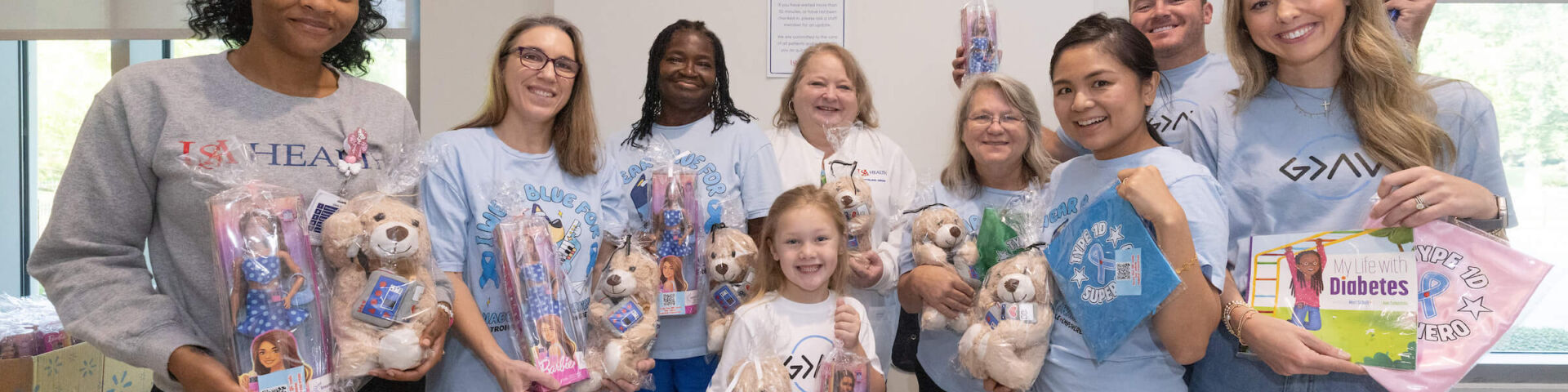
The family recently dropped off more than 130 T1D Barbie dolls, stuffed bears equipped with glucose meters and insulin pumps, plus “My Life as a Diabetic” books, and T1D superhero capes with matching masks to team members in pediatric endocrinology at the USA Health Strada Patient Care Center.
Charlie’s parents also created a website for parents and caregivers navigating a new Type 1 diabetes diagnosis. The website includes helpful products, resources, support groups, and other tools that have helped the Thompson family throughout their journey with Charlie, with the hope of making the transition into a “new normal” a little easier for other families. Visit the site.
Charlie, now a first grader at Saraland Early Education Center, said it made her feel good to be able to help other children who may go through some of the same challenges she did and that these toys would hopefully make them feel less alone. “It makes me feel happy that I can help.”
More than 2 million Americans are living with Type 1 diabetes, including about 314,000 children and adolescents, according to the American Diabetes Association. An estimated 1.5 million Americans are diagnosed every year. Once known as juvenile diabetes or insulin-dependent diabetes, Type 1 diabetes has no cure. Despite that, the illness can typically be managed with daily glucose monitoring and insulin injections as needed.
“We’re incredibly grateful for everything USA Health and the pediatric endocrinology team have done and continue to do for Charlie and our family,” said Kristian Thompson, Charlie’s mom.