USA Health article on neonatal birth fractures published in academic journal
“Having a healthy respect for these injuries and staying informed on the various types of neonatal birth fractures that can occur – especially the rare ones – are important,” said Tyler C. McDonald, M.D.
By Carol McPhail
[email protected]
A review article on neonatal birth fractures by two USA Health orthopaedic surgeons and a medical student has been published in the Journal of the Pediatric Orthopaedic Society of North America.
The article, published online in the academic journal recently, reviews the incidence, risk factors and treatment for various fractures that can be sustained by an infant during the delivery process. The authors are Tyler C. McDonald, M.D., and William A. Cutchen, M.D., pediatric orthopaedic surgeons at USA Health, and C. Lake Higdon, a third-year medical student at the Frederick P. Whiddon College of Medicine at the University of South Alabama.
Overall, birth fractures in babies are rare, occurring at a rate of about 0.23 per 1,000 live births, but fractures can be missed initially. McDonald said the article is intended to provide more information on the topic for those who care for neonates.
“Having a healthy respect for these injuries and staying informed on the various types of neonatal birth fractures that can occur — especially the rare ones — are important,” McDonald said. “Timely recognition allows for earlier treatment, and earlier treatment typically leads to better outcomes.”
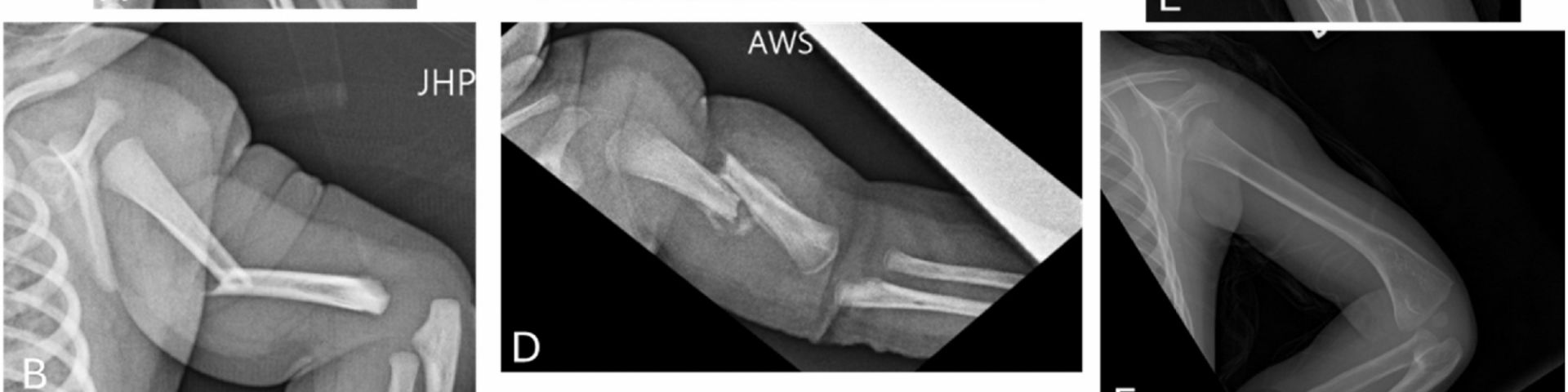
The article summarizes various types of relatively common fracture patterns, such as clavicle fractures, and some uncommon fracture patterns, such as distal femoral physeal fractures, in which a break occurs at the growth plate located at the lower end of the thigh bone.
In the case of clavicle fractures, infants with a painful arm range of motion can be gently swathed with a soft bandage or have their sleeve pinned to their shirt and have an excellent prognosis, the article said.
With distal femoral physeal fractures, which are more rare, the authors advocate for a nonoperative treatment that calls for immobilizing injuries that are nondisplaced or in the process of healing. Providers may also attempt to set the bone with or without an operation when a fracture is diagnosed immediately, the article said.